
Headline:
Debate on Judicial Corruption Rekindled After Court Flags Concerns Over NCERT
 Textbook Content
New Delhi, February 26, 2026:
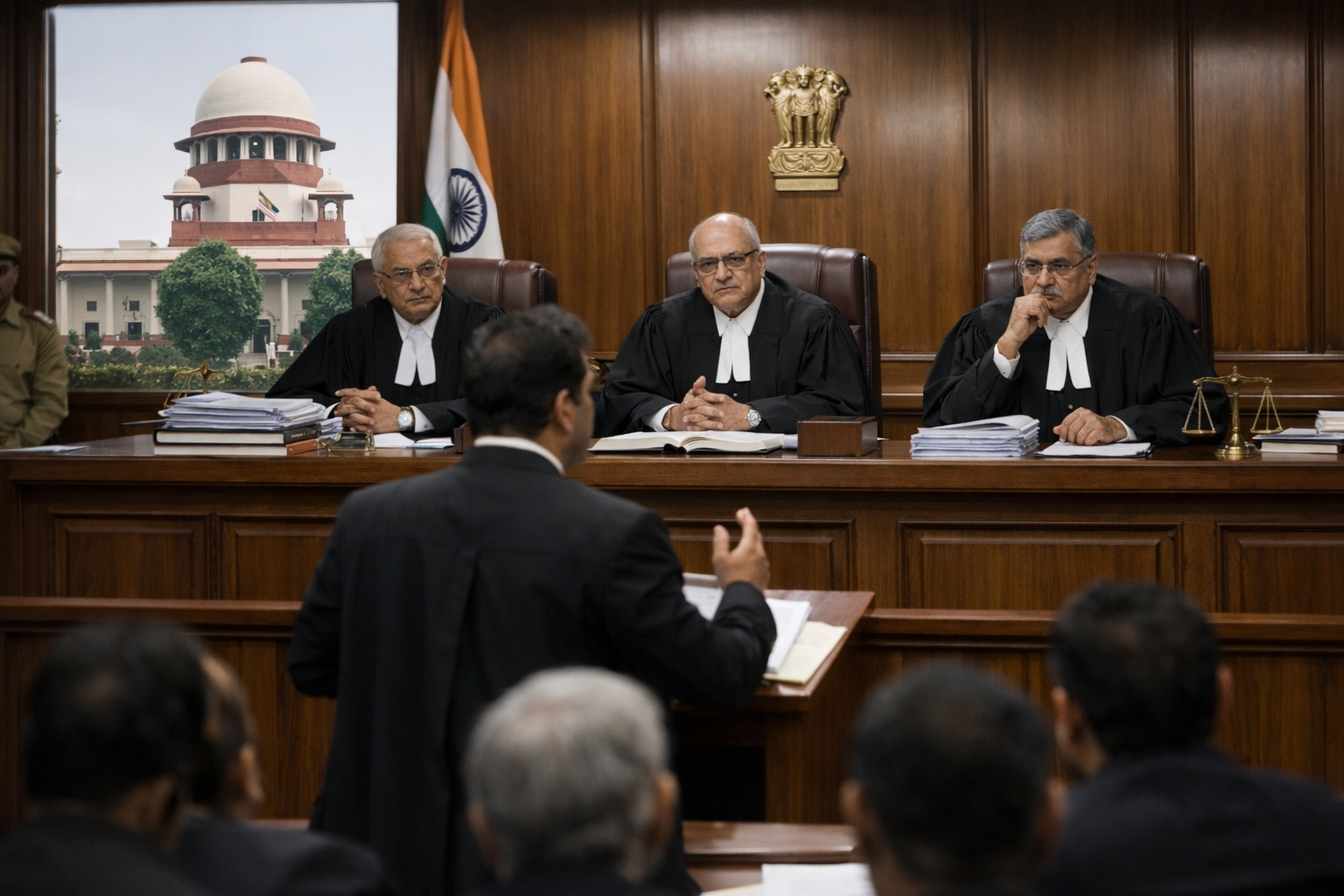
The issue of judicial corruption and public perception of the judiciary has come into sharp focus after strong observations were made in court regarding references in a newly released NCERT Class 8 Social Science textbook.
During the proceedings, concerns were raised that certain portions of the textbook titled Exploring Society: India and Beyond include references to complaints against the judiciary and statements suggesting that people experience corruption at various levels of the judicial system. The court expressed serious reservations, observing that the Constitution of India clearly establishes the judiciary as an independent pillar of democracy, alongside the legislature and the executive, with clearly defined powers and responsibilities.
Senior counsel appearing in the matter stated that the institution of the judiciary must be protected and that if any wrongdoing has occurred in presenting such sensitive content, those responsible must be held accountable. It was argued that presenting such material without proper context could damage public trust, especially among young students.
The Bench noted that the textbook appeared to selectively quote remarks attributed to a former Chief Justice of India, creating an impression that the judiciary itself had acknowledged corruption, lack of transparency, and accountability. The court observed that such references, if presented without full context, could undermine the institutional integrity of the judiciary.
At the same time, the broader issue of judicial accountability and transparency has long been part of public discourse in India. Experts maintain that while the judiciary remains one of the most respected institutions in the country, discussions around reforms, accountability mechanisms, and public perception continue to be important in strengthening democratic institutions.
The court emphasized that educational content, especially at the school level, must be carefully reviewed to ensure accuracy, balance, and responsibility, given its potential impact on young minds and public confidence in constitutional institutions.
The matter is expected to undergo further examination, and the concerned authorities may be asked to review the content to ensure it aligns with constitutional values and institutional dignity.
— TheStrongSignal.in
Headline: Debate on Judicial Corruption Rekindled After Court Flags Concerns Over NCERT Textbook Content New Delhi, February 26, 2026:



- Advertisement -